
Blog Details
Introduction
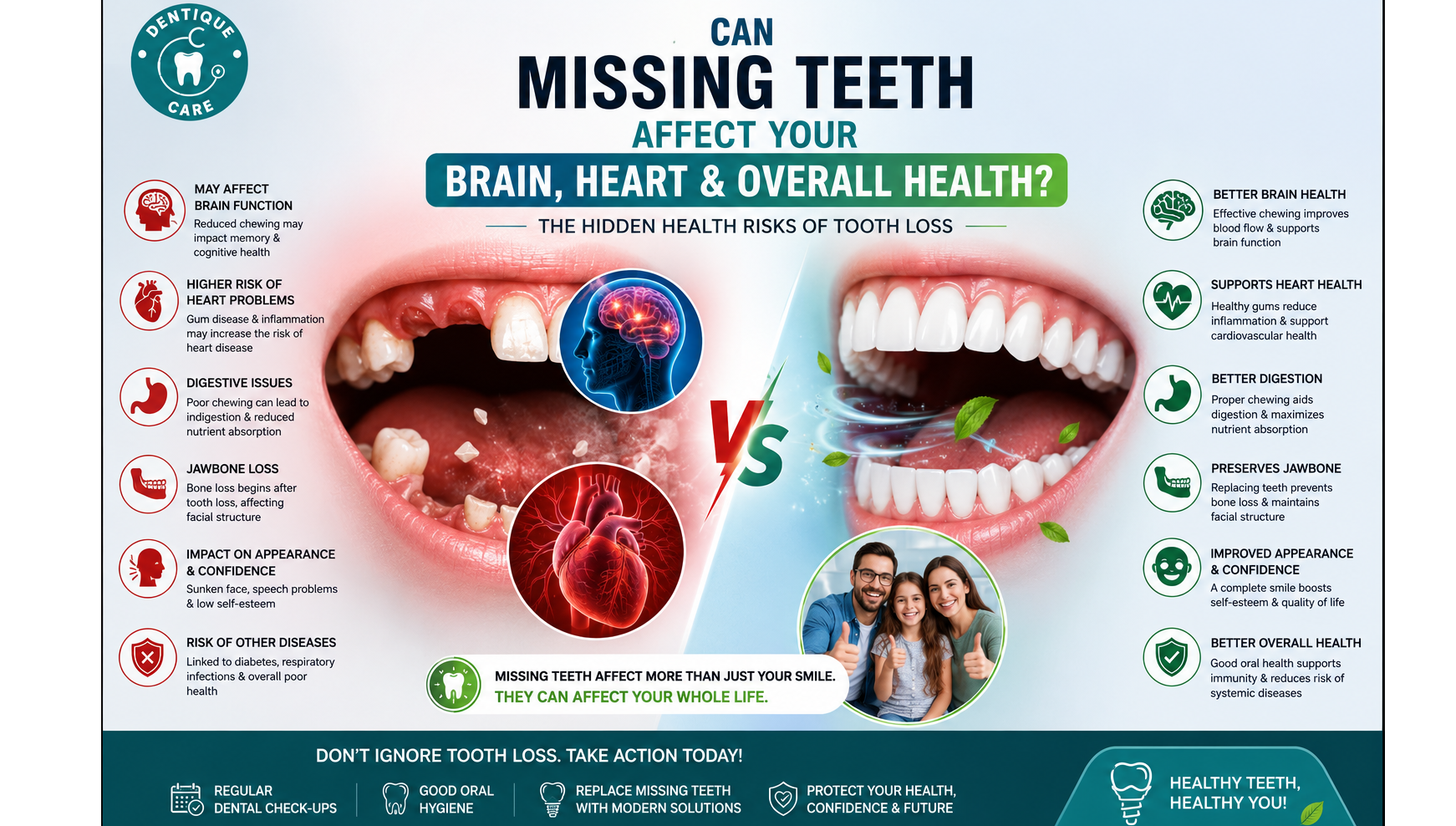
Most people consider missing teeth to be a cosmetic issue that affects their smile and confidence. However, modern research suggests that tooth loss may have far-reaching consequences that extend well beyond oral health. Missing teeth can impact your ability to chew, alter facial structure, affect nutrition, and even increase the risk of serious health conditions involving the brain, heart, and overall well-being.
The mouth is often called the gateway to the body, and oral health is closely connected to systemic health. When one or more teeth are missing, it can trigger a chain reaction that affects multiple organs and bodily functions.
So, can missing teeth really affect your brain, heart, and overall health?
The answer is yes. While losing a tooth does not directly cause diseases, it can contribute to conditions and lifestyle changes that increase the risk of various health problems.
This comprehensive guide explores the connection between missing teeth and overall health and explains why replacing lost teeth is more important than many people realize.
What Causes Tooth Loss?
Tooth loss can occur due to several reasons, including:
- Severe tooth decay
- Gum disease (periodontitis)
- Dental trauma or accidents
- Untreated infections
- Poor oral hygiene
- Smoking and tobacco use
- Certain medical conditions
- Aging-related oral health issues
Regardless of the cause, missing teeth should never be ignored.
How Missing Teeth Affect Your Body
Teeth play an essential role in:
- Chewing and digestion
- Speech and pronunciation
- Jawbone stimulation
- Facial support
- Nutrition
- Self-confidence
- Overall health
When teeth are lost, these functions become compromised, leading to long-term health consequences.
The Connection Between Missing Teeth and Brain Health
1. Reduced Chewing Ability May Affect Brain Function
Chewing does much more than break down food.
Research suggests that chewing stimulates blood flow to the brain and activates regions responsible for memory and cognitive function.
When people lose multiple teeth, they often:
- Avoid certain foods
- Chew less effectively
- Experience reduced sensory stimulation
Some studies indicate that reduced chewing ability may be associated with:
- Memory decline
- Cognitive impairment
- Reduced mental performance in older adults.
2. Increased Risk of Cognitive Decline
Scientists have found links between poor oral health and neurodegenerative diseases.
Potential explanations include:
- Chronic inflammation
- Nutritional deficiencies
- Reduced blood flow stimulation
- Increased systemic inflammation
Although missing teeth do not directly cause dementia, maintaining good oral health may contribute to better cognitive health over time.
3. Nutritional Deficiencies and Brain Health
People with missing teeth often avoid:
- Fruits
- Nuts
- Raw vegetables
- Protein-rich foods
This can lead to deficiencies in nutrients essential for brain function, including:
- Vitamin B12
- Omega-3 fatty acids
- Iron
- Folate
- Antioxidants
Poor nutrition can negatively affect memory, concentration, and overall brain health.
Can Missing Teeth Affect Heart Health?
The Oral-Systemic Connection
The relationship between oral health and cardiovascular health has become a major area of medical research.
People with tooth loss often have a history of:
- Gum disease
- Chronic inflammation
- Oral infections
These conditions may contribute to increased risks of:
- Heart disease
- Stroke
- High blood pressure complications
1. Chronic Inflammation and Heart Disease
Inflammation is one of the major links between oral health and cardiovascular health.
Untreated gum disease and oral infections can allow inflammatory substances to enter the bloodstream.
Chronic inflammation has been associated with:
- Artery damage
- Plaque formation
- Increased cardiovascular risks
Maintaining healthy teeth and gums can help reduce inflammatory burden on the body.
2. Increased Risk of Poor Dietary Habits
People missing several teeth often choose:
- Soft processed foods
- Sugary foods
- Refined carbohydrates
Over time, these dietary habits can increase the risk of:
- Obesity
- Diabetes
- High cholesterol
- Cardiovascular disease
Nutrition plays a critical role in heart health, and tooth loss can significantly influence food choices.
How Missing Teeth Affect Overall Health
The impact of tooth loss extends beyond the brain and heart.
1. Digestive Problems
The digestive process begins in the mouth.
Proper chewing:
- Breaks food into smaller particles
- Assists nutrient absorption
- Supports healthy digestion
Missing teeth often lead to:
- Inadequate chewing
- Digestive discomfort
- Reduced nutrient absorption
Poor digestion may contribute to long-term health issues.
2. Jawbone Loss
Every tooth root stimulates the jawbone.
When a tooth is lost:
- Bone stimulation decreases.
- The jawbone gradually shrinks.
- Facial structure changes.
This process is known as bone resorption.
Over time, bone loss can:
- Alter facial appearance
- Make future dental treatments more difficult
- Affect neighboring teeth
3. Shifting of Remaining Teeth
When a tooth is missing, surrounding teeth begin to move into the empty space.
This can cause:
- Bite problems
- Misalignment
- Difficulty cleaning teeth
- Increased risk of cavities
- Jaw discomfort
Even a single missing tooth can create long-term dental complications.
4. Increased Risk of Gum Disease
Gaps created by missing teeth can become difficult to clean.
Bacteria may accumulate, increasing the risk of:
- Gum infections
- Tooth decay
- Additional tooth loss
Replacing missing teeth helps maintain proper oral function and hygiene.
5. Speech Problems
Teeth play an important role in speech.
Missing teeth can make it difficult to pronounce certain sounds and words.
This may lead to:
- Communication challenges
- Reduced confidence
- Social anxiety
6. Mental and Emotional Health Effects
Tooth loss can significantly impact emotional well-being.
Many individuals experience:
- Lower self-esteem
- Embarrassment
- Social withdrawal
- Anxiety
- Reduced confidence
Mental health is an essential part of overall health, and restoring missing teeth often improves quality of life.
Can Missing Teeth Increase the Risk of Other Diseases?
Tooth loss has been associated with several health conditions, including:
- Diabetes complications
- Nutritional deficiencies
- Respiratory infections
- Osteoporosis
- Frailty in older adults
While tooth loss itself may not directly cause these conditions, it can contribute to risk factors that influence overall health.
Warning Signs That Missing Teeth Are Affecting Your Health
You should seek professional dental care if you experience:
- Difficulty chewing
- Frequent indigestion
- Weight changes due to food restrictions
- Jaw pain
- Facial changes
- Speech difficulties
- Multiple missing teeth
- Loss of confidence while smiling
Early treatment can help prevent long-term complications.
How to Prevent Tooth Loss
1. Practice Good Oral Hygiene
- Brush twice daily.
- Floss every day.
- Use fluoride toothpaste.
2. Visit Your Dentist Regularly
Routine checkups can identify problems before they become severe.
3. Treat Gum Disease Early
Gum disease is one of the leading causes of tooth loss in adults.
4. Avoid Smoking and Tobacco
Smoking significantly increases the risk of:
- Gum disease
- Tooth loss
- Oral infections
5. Eat a Balanced Diet
A healthy diet supports strong teeth and gums.
Include:
- Calcium-rich foods
- Fruits and vegetables
- Lean proteins
- Vitamin D sources
Treatment Options for Missing Teeth
Modern dentistry offers several solutions.
Dental Implants
Dental implants are considered one of the most effective long-term solutions because they:
- Restore chewing ability
- Preserve jawbone
- Improve appearance
- Function like natural teeth
Dental Bridges
Bridges replace one or more missing teeth by using neighboring teeth for support.
Dentures
Partial and complete dentures are suitable for replacing multiple missing teeth.
Implant-Supported Dentures
These combine the benefits of implants and dentures for improved stability and comfort.
Frequently Asked Questions
Can losing teeth affect memory?
Some studies suggest that reduced chewing ability and poor oral health may be associated with cognitive decline and memory problems.
Can missing teeth affect the heart?
Poor oral health and chronic inflammation associated with tooth loss may increase the risk factors linked to cardiovascular disease.
Is it important to replace a single missing tooth?
Yes. Even one missing tooth can affect chewing, alignment, and long-term oral health.
Are dental implants beneficial for overall health?
Dental implants help restore chewing function, support jawbone health, and improve quality of life.
Final Thoughts
Missing teeth are much more than a cosmetic concern. They can influence your ability to eat, speak, and maintain proper nutrition. Emerging research also highlights important connections between oral health, brain health, heart health, and overall well-being.
Tooth loss may contribute to:
- Reduced chewing efficiency
- Nutritional deficiencies
- Chronic inflammation
- Bone loss
- Digestive problems
- Emotional stress
- Increased health risks over time
The good news is that modern dentistry offers effective solutions to restore both function and confidence.
Protecting your teeth is not just about preserving your smile—it's about protecting your brain, supporting your heart, and maintaining your overall health for years to come.