
Blog Details
Introduction
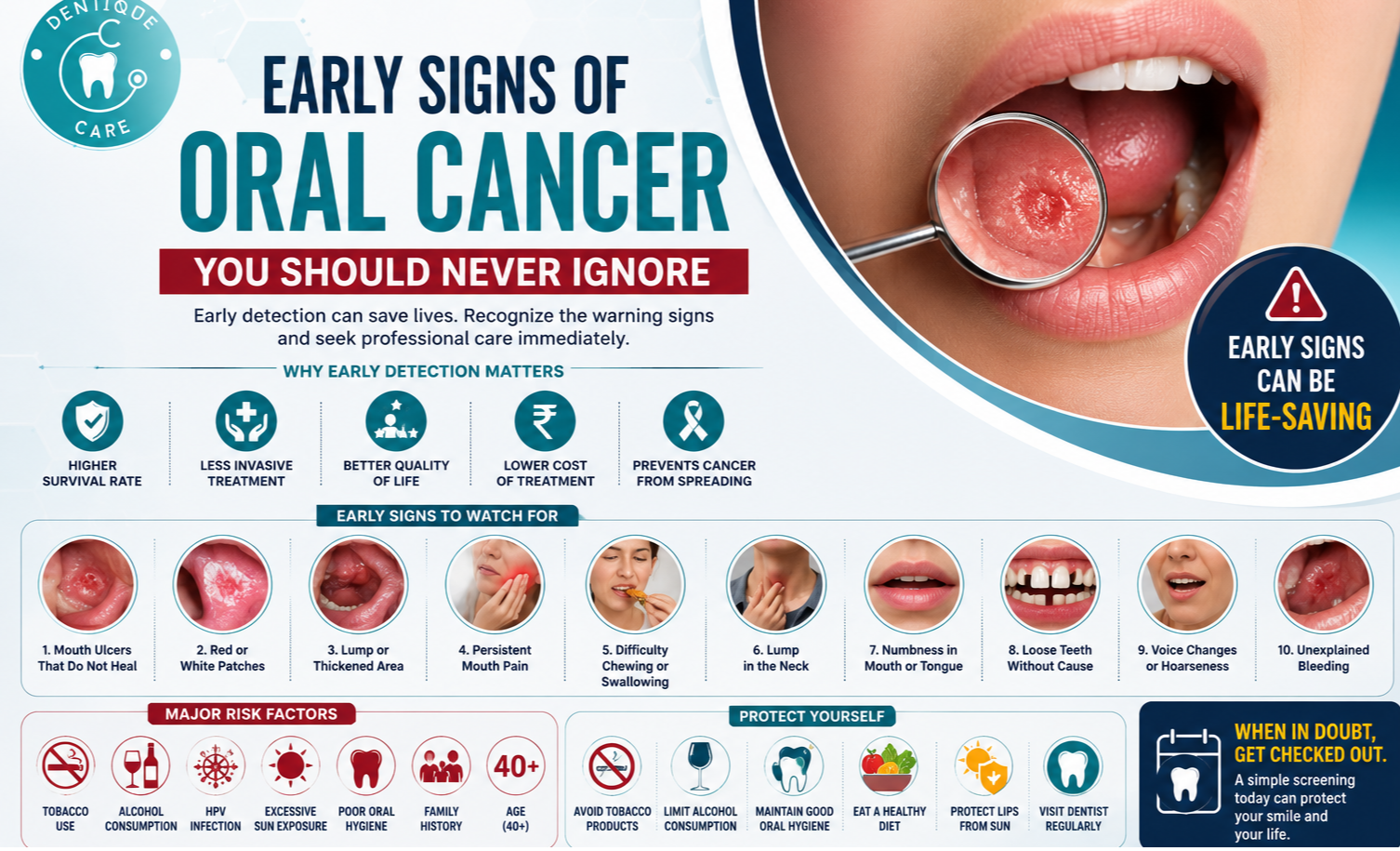
Oral cancer is one of the most serious yet often overlooked health conditions affecting millions of people worldwide. The alarming fact is that many cases of oral cancer are diagnosed at advanced stages, making treatment more difficult and reducing survival rates. However, when detected early, oral cancer is highly treatable and the chances of successful recovery increase significantly.
The challenge is that the early signs of oral cancer are often painless and can easily be mistaken for common dental problems such as mouth ulcers, gum infections, or minor irritations. Many people ignore these symptoms until they become severe.
Understanding the warning signs and seeking timely medical attention can save lives.
In this comprehensive guide, you'll learn about the early signs of oral cancer you should never ignore, the major risk factors, prevention tips, and when to seek professional care.
What Is Oral Cancer?
Oral cancer, also known as mouth cancer, refers to the uncontrolled growth of abnormal cells in the:
- Lips
- Tongue
- Gums
- Inner cheeks
- Floor of the mouth
- Roof of the mouth
- Tonsils
- Throat (oropharynx)
Oral cancer is a type of head and neck cancer and can spread to other parts of the body if not detected and treated early.
Why Early Detection Matters
Early-stage oral cancer has a significantly better prognosis than advanced-stage cancer.
Benefits of early diagnosis include:
- Higher survival rates
- Less invasive treatments
- Better quality of life
- Reduced treatment costs
- Lower risk of cancer spreading
Regular dental checkups often play a critical role because dentists can identify suspicious changes before symptoms become severe.
1. Mouth Ulcers That Do Not Heal
Why It's a Warning Sign
One of the most common early symptoms of oral cancer is a sore or ulcer that does not heal within two to three weeks.
These ulcers may:
- Persist for several weeks
- Reappear frequently
- Become larger over time
- Bleed easily
Not every mouth ulcer is cancerous, but any persistent sore should be examined by a dental professional.
2. Red or White Patches Inside the Mouth
White Patches (Leukoplakia)
White patches that cannot be scraped away may indicate abnormal cell changes.
Red Patches (Erythroplakia)
Red patches are often considered more concerning because they have a higher likelihood of containing precancerous or cancerous cells.
These patches may appear on:
- Tongue
- Gums
- Inner cheeks
- Floor of the mouth
Any unexplained patch that persists should be evaluated.
3. A Lump or Thickened Area in the Mouth
A lump, swelling, or thickened tissue inside the mouth may be an early sign of oral cancer.
Possible locations include:
- Tongue
- Gums
- Cheeks
- Jaw area
- Roof of the mouth
A painless lump should never be ignored, especially if it grows or persists.
4. Persistent Mouth Pain
Although early oral cancer may not cause pain, some individuals experience:
- Burning sensations
- Persistent discomfort
- Unexplained pain in the mouth
Pain that does not improve with routine dental treatment requires further evaluation.
5. Difficulty Chewing or Swallowing
Difficulty while eating or swallowing can occur if abnormal tissue growth interferes with normal mouth function.
Symptoms may include:
- Pain during swallowing
- Feeling that food is stuck
- Difficulty chewing
Persistent swallowing problems warrant immediate medical attention.
6. A Lump in the Neck
Oral cancer can spread to nearby lymph nodes.
Warning signs include:
- Swelling in the neck
- Enlarged lymph nodes
- Persistent neck lumps
Any neck lump lasting more than two weeks should be professionally evaluated.
7. Numbness in the Mouth or Tongue
Unexpected numbness in the:
- Lips
- Tongue
- Face
- Mouth tissues
can indicate nerve involvement.
Persistent numbness should never be ignored.
8. Loose Teeth Without an Obvious Cause
Teeth may become loose due to:
- Gum disease
- Bone loss
- Oral cancer affecting surrounding tissues
If teeth suddenly become loose despite good oral hygiene, further investigation may be necessary.
9. Changes in Voice or Persistent Hoarseness
Cancer affecting the mouth or throat may lead to:
- Hoarseness
- Changes in speech
- Persistent sore throat
- Voice changes
Symptoms lasting more than two weeks should be assessed by a healthcare professional.
10. Difficulty Moving the Tongue or Jaw
Early oral cancer may cause:
- Stiffness
- Limited mouth opening
- Difficulty moving the tongue
- Jaw discomfort
Changes in normal mouth movement should be evaluated promptly.
11. Unexplained Bleeding in the Mouth
Persistent or recurring bleeding without a clear reason may indicate:
- Infection
- Trauma
- Abnormal tissue growth
Bleeding that continues or frequently returns should be examined.
12. Chronic Bad Breath
Persistent bad breath that does not improve with:
- Brushing
- Flossing
- Mouthwash
may occasionally be associated with oral infections or cancerous lesions.
Although bad breath alone does not indicate cancer, it should not be ignored if accompanied by other symptoms.
13. Ear Pain Without an Ear Infection
Oral cancer can sometimes cause referred pain to the ear.
Symptoms may include:
- Ear pain
- Fullness in the ear
- Discomfort without infection
Persistent unexplained ear pain should be investigated.
Major Risk Factors for Oral Cancer
Understanding risk factors can help with prevention and early detection.
Tobacco Use
Smoking and smokeless tobacco significantly increase oral cancer risk.
Alcohol Consumption
Heavy alcohol use is another major risk factor.
The combination of tobacco and alcohol dramatically increases the risk.
Human Papillomavirus (HPV)
Certain strains of HPV are associated with cancers of the mouth and throat.
Excessive Sun Exposure
Long-term sun exposure increases the risk of lip cancer.
Poor Oral Hygiene
Chronic irritation and poor oral health may contribute to increased risk.
Family History
A family history of cancer can increase susceptibility.
Age
Oral cancer is more common in adults over 40, but younger individuals can also develop the disease.
Who Should Get Screened for Oral Cancer?
Regular oral cancer screenings are particularly important for:
- Smokers
- Tobacco users
- Heavy alcohol consumers
- Individuals over 40 years of age
- People with HPV infections
- Those with a family history of cancer
Dentists can perform simple, painless oral cancer screenings during routine dental visits.
How Dentists Detect Oral Cancer Early
During an examination, dentists may look for:
- Unusual patches
- Mouth sores
- Lumps
- Tissue changes
- Swelling
Additional tests may include:
- Imaging studies
- Special screening devices
- Biopsy if necessary
Early evaluation is critical for an accurate diagnosis.
How to Reduce Your Risk of Oral Cancer
Avoid Tobacco Products
Quitting tobacco is one of the most effective ways to reduce risk.
Limit Alcohol Consumption
Reducing alcohol intake can significantly lower the risk.
Maintain Good Oral Hygiene
Healthy teeth and gums contribute to better oral health.
Eat a Healthy Diet
Consume:
- Fruits
- Vegetables
- Antioxidant-rich foods
A nutritious diet supports overall health and may reduce cancer risk.
Protect Your Lips from Sun Exposure
Use lip products that contain sun protection.
Schedule Regular Dental Checkups
Routine dental visits help identify problems before they become serious.
When Should You See a Dentist or Doctor?
Seek professional evaluation if you have:
- A mouth ulcer lasting longer than two weeks
- Red or white patches
- A lump in the mouth or neck
- Difficulty swallowing
- Persistent mouth pain
- Unexplained bleeding
- Numbness in the tongue or lips
- Voice changes
- Loose teeth without explanation
Early intervention can save lives.
Frequently Asked Questions
Is every mouth ulcer cancer?
No. Most mouth ulcers are harmless. However, any ulcer that does not heal within two to three weeks should be evaluated.
Can oral cancer occur in non-smokers?
Yes. While tobacco is a major risk factor, oral cancer can also occur in people who do not smoke.
Is oral cancer painful in its early stages?
Not always. Many early cases are painless, which is why regular screenings are important.
Can dentists detect oral cancer?
Yes. Dentists are often the first healthcare professionals to notice suspicious changes during routine examinations.
Final Thoughts
Oral cancer is a serious condition, but early detection dramatically improves treatment outcomes and survival rates.
Never ignore these warning signs:
1. Non-healing mouth ulcers
2. Red or white patches
3. Lumps or swelling
4. Persistent pain
5. Difficulty swallowing
6. Neck lumps
7. Numbness
8. Loose teeth
9. Voice changes
10. Unexplained bleeding
11. Chronic bad breath
12. Ear pain
Most oral changes are not cancer, but persistent symptoms should always be evaluated by a qualified dental or medical professional.
Your mouth can provide important clues about your overall health. Paying attention to early signs of oral cancer and seeking timely care could make a life-saving difference.