Blog Details

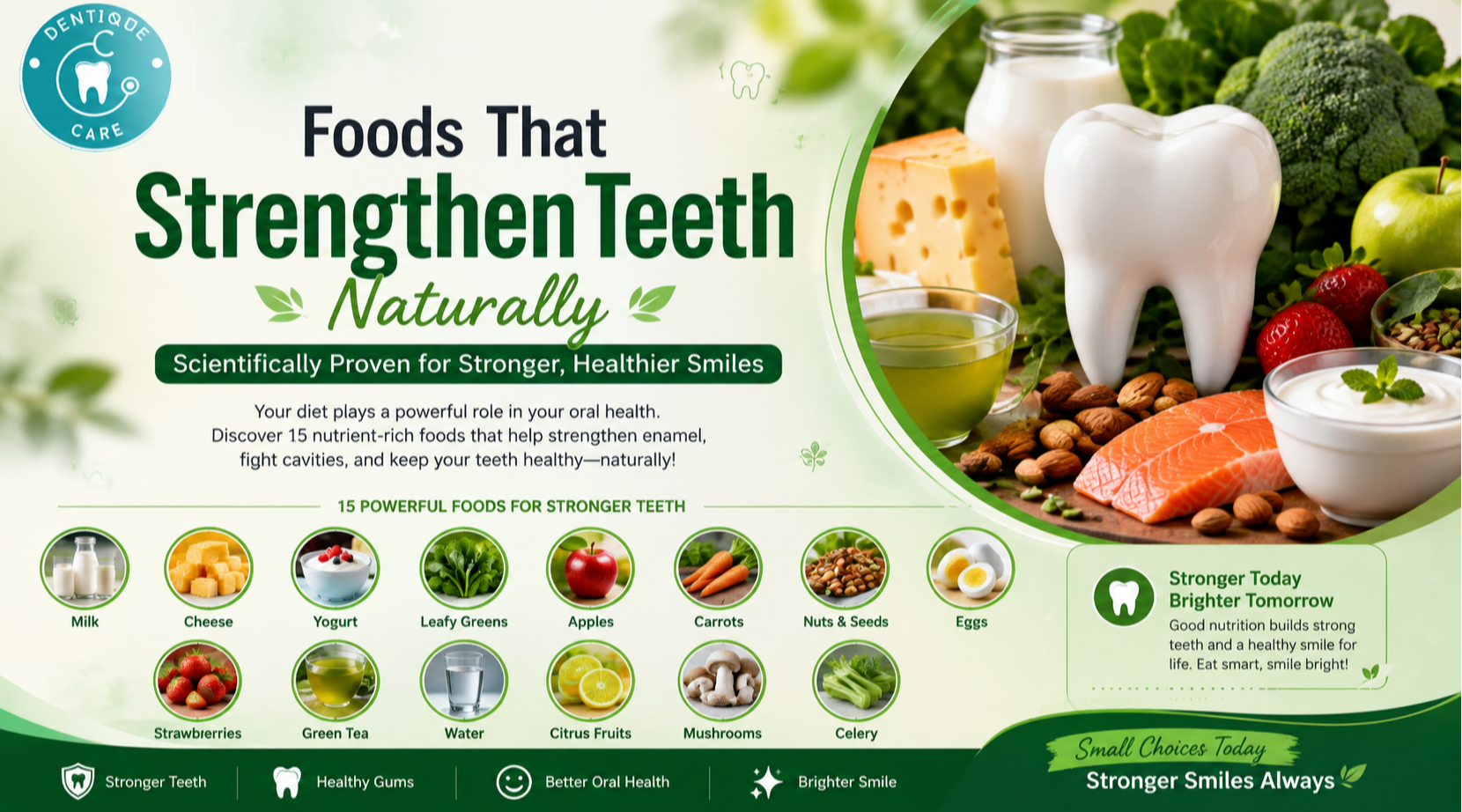
Most people believe that brushing and flossing are the only ways to maintain healthy teeth. While good oral hygiene is essential, your diet plays an equally important role in determining the strength and longevity of your teeth.
Your teeth need specific nutrients to remain strong, resist cavities, and maintain healthy enamel. Scientific research has shown that certain foods can naturally strengthen teeth by providing essential minerals, stimulating saliva production, reducing harmful bacteria, and supporting gum health.
The good news? You don't need expensive supplements or complicated treatments to improve your oral health. By including the right foods in your daily diet, you can naturally protect your teeth and maintain a healthier smile.
In this comprehensive guide, we'll explore the best scientifically proven foods that strengthen teeth naturally, how they work, and why they should become part of your regular diet.
Teeth are living structures that constantly undergo demineralization and remineralization.
Occurs when acids from bacteria and sugary foods remove minerals from the tooth enamel.
Occurs when minerals such as calcium and phosphate rebuild and strengthen enamel.
A nutrient-rich diet supports remineralization and helps protect against:
Before discussing specific foods, it's important to understand the nutrients that contribute to healthy teeth:
These nutrients work together to maintain strong enamel and healthy gums.
Milk is rich in:
These nutrients help rebuild enamel and strengthen tooth structure.
Milk also has a relatively neutral pH, which helps reduce acidity in the mouth.
Research has shown that dairy products support remineralization and reduce the risk of cavities.
Cheese increases saliva production and contains:
These compounds help protect and repair tooth enamel.
Studies suggest that cheese consumption can increase the mouth's pH level, reducing the risk of tooth decay.
Yogurt contains:
The probiotics may help reduce harmful oral bacteria associated with cavities and gum disease.
Regular yogurt consumption has been linked to improved oral health and stronger teeth.
Choose plain, unsweetened yogurt to avoid added sugars.
Vegetables such as:
contain:
These nutrients support both teeth and gum health.
Leafy greens help strengthen enamel while reducing inflammation in the gums.
Apples stimulate saliva production and contain fiber that helps clean the teeth naturally.
Increased saliva helps neutralize acids and wash away bacteria.
Apples are beneficial but should not replace brushing and flossing.
Carrots contain:
Vitamin A supports healthy enamel and promotes saliva production.
Crunchy vegetables also help remove food particles and plaque from tooth surfaces.
Nuts provide:
These nutrients contribute to enamel strength and bone health.
Regular consumption supports mineral balance and overall dental health.
Fish such as:
are rich in:
Vitamin D improves calcium absorption, making it essential for strong teeth.
Adequate Vitamin D levels are associated with lower cavity risk and better oral health.
Eggs contain:
These nutrients support healthy enamel and tooth structure.
Protein is essential for maintaining the tissues that support teeth and gums.
Strawberries are rich in:
Vitamin C helps maintain healthy gums and connective tissues.
Healthy gums provide essential support for strong teeth.
Green tea contains:
These compounds may reduce harmful oral bacteria and decrease inflammation.
Studies suggest that green tea can contribute to improved oral hygiene and reduced cavity risk.
Water helps:
Fluoridated water may also help strengthen enamel.
Proper hydration is essential for maintaining healthy oral tissues and reducing cavity risk.
Citrus fruits provide:
Vitamin C supports healthy gums and collagen production.
Because citrus fruits are acidic, they should be consumed in moderation and followed by water.
Certain mushrooms are rich in:
Vitamin D plays a critical role in calcium absorption and tooth mineralization.
Celery:
It acts as a natural cleanser for the mouth.
Just as certain foods strengthen teeth, others can damage them.
Limit:
These foods increase acid production and contribute to enamel erosion.
A tooth-friendly meal plan could include:
A balanced diet provides the nutrients necessary for healthy teeth and gums.
Nutrition works best when combined with proper oral care:
Yes. Foods rich in calcium, phosphorus, and Vitamin D help support enamel remineralization and overall oral health.
Apples and strawberries are excellent choices due to their fiber and vitamin content.
Yes. Milk is one of the best natural sources of calcium and phosphorus.
While damaged enamel cannot regrow, remineralization can strengthen existing enamel and help prevent further damage.
Strong teeth are built not only with toothbrushes and dental treatments but also with proper nutrition.
The best scientifically proven foods for stronger teeth include:
1. Milk
2. Cheese
3. Yogurt
4. Leafy greens
5. Apples
6. Carrots
7. Nuts and seeds
8. Fatty fish
9. Eggs
10. Strawberries
11. Green tea
12. Water
13. Citrus fruits in moderation
14. Mushrooms
15. Celery
Incorporating these foods into your daily routine can help support enamel health, reduce the risk of cavities, strengthen gums, and improve your overall oral health.
A healthy smile starts in the kitchen. By choosing the right foods today, you can naturally build stronger teeth and enjoy better oral health for years to come.