Blog Details

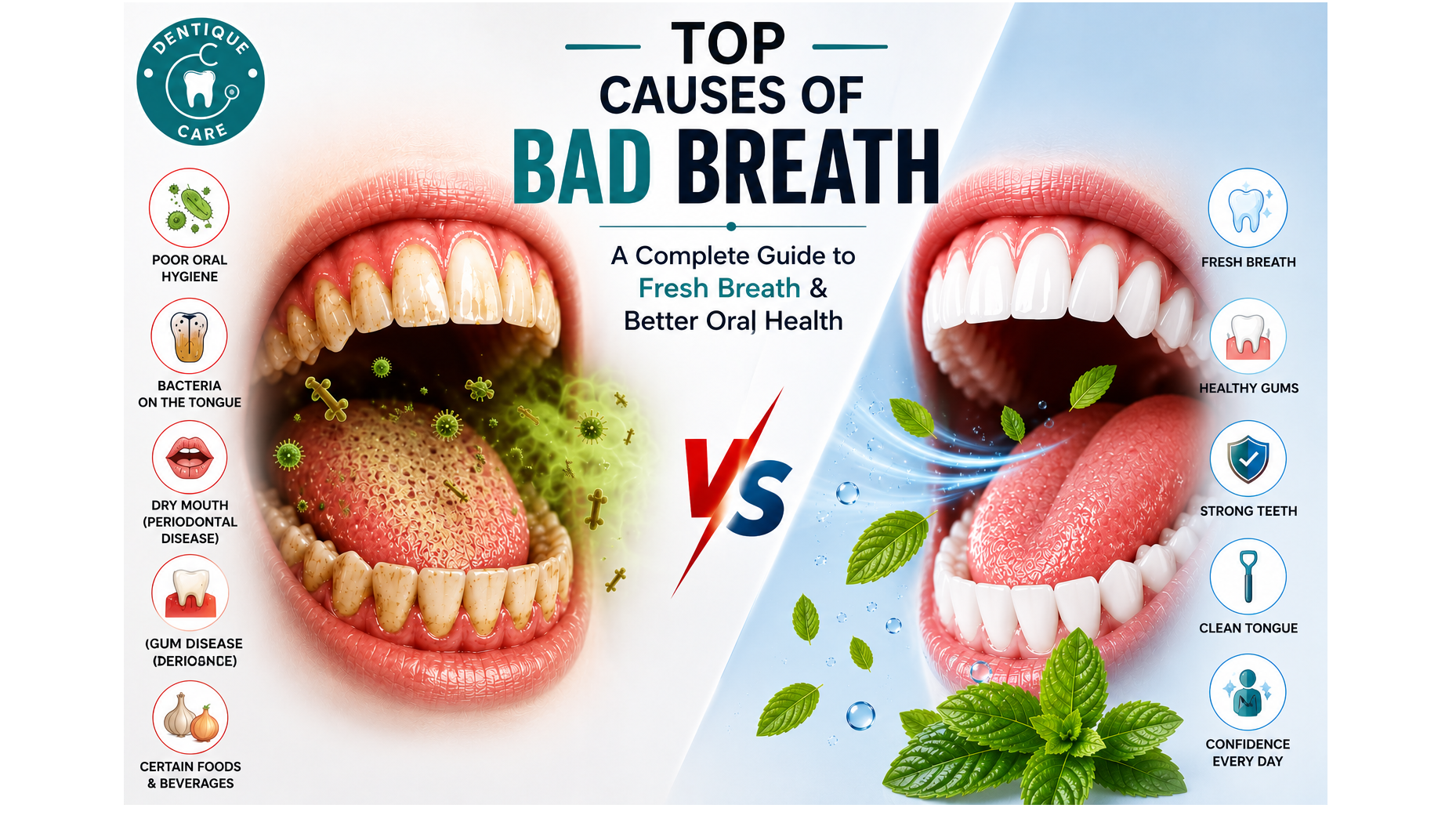
Bad breath, medically known as halitosis, affects millions of people worldwide. It can impact confidence, relationships, social interactions, and even professional opportunities. While occasional bad breath after eating certain foods is normal, persistent bad breath is often a sign of an underlying issue that needs attention.
Many people rely on chewing gum, mouth fresheners, or mints for temporary relief. However, these products only mask the odor rather than address the root cause. The key to permanently eliminating bad breath is understanding why it happens in the first place.
This comprehensive guide explores the top 10 causes of bad breath and their long-term solutions, helping you achieve fresh breath and better overall oral health.
Bad breath is an unpleasant odor originating from the mouth. It usually occurs when bacteria break down food particles and release sulfur compounds that produce a foul smell.
Common symptoms include:
While occasional bad breath is common, chronic halitosis may indicate dental or medical conditions that require professional attention.
Poor brushing and flossing habits allow food particles to remain between teeth and along the gum line. These particles become breeding grounds for bacteria, leading to foul-smelling sulfur compounds.
Plaque buildup also contributes to gum disease and persistent bad breath.
Maintaining excellent oral hygiene is the first and most important step toward fresh breath.
The tongue contains tiny crevices where bacteria, food debris, and dead cells accumulate. This bacterial coating often appears as a white or yellow layer and is one of the leading causes of chronic bad breath.
A clean tongue can significantly improve breath freshness.
Saliva naturally cleanses the mouth by washing away bacteria and food particles. When saliva production decreases, bacteria multiply rapidly, causing bad breath.
Dry mouth can occur due to:
Hydration is one of the simplest yet most effective ways to combat bad breath.
Gum disease develops when plaque and bacteria accumulate around the gums, causing infection and inflammation.
Symptoms include:
Because bacteria remain trapped deep within gum pockets, the odor often becomes chronic.
Treating gum disease often results in dramatic improvements in breath odor.
Foods such as:
contain compounds that enter the bloodstream and eventually reach the lungs, causing unpleasant breath odors.
The odor usually disappears once the food compounds leave the body.
Smoking reduces saliva production and encourages bacterial growth. Tobacco also leaves chemical residues inside the mouth that contribute to unpleasant odors.
Smokers are also more likely to develop:
Stopping tobacco use not only improves breath but also significantly enhances overall health.
Cavities and infected teeth create spaces where bacteria thrive. Food particles trapped inside decayed teeth release foul-smelling compounds.
Dental abscesses may also produce a strong, unpleasant odor.
Ignoring tooth decay can lead to severe dental complications and persistent bad breath.
Mucus draining from the sinuses into the throat creates an ideal environment for bacterial growth.
People suffering from:
often experience persistent bad breath.
Addressing sinus problems can significantly improve breath freshness.
Certain digestive conditions can contribute to unpleasant breath.
Examples include:
Stomach acids and gases can travel upward and create unpleasant odors.
Treating digestive disorders often eliminates recurring bad breath.
Persistent bad breath can occasionally signal underlying health conditions such as:
Different diseases produce distinct odors that may be noticeable in the breath.
When bad breath persists despite excellent oral hygiene, medical evaluation is recommended.
Several habits can make bad breath worse:
Making healthy lifestyle changes can greatly improve breath quality.
Use fluoride toothpaste and brush for at least two minutes.
Floss removes trapped food particles and bacteria.
Tongue cleaning significantly reduces odor-causing bacteria.
Proper hydration helps maintain saliva production.
Routine checkups help detect problems before they worsen.
Fruits and vegetables naturally help clean the mouth.
Sugar encourages bacterial growth and plaque formation.
One of the most effective long-term solutions for fresh breath.
While these remedies do not replace proper treatment, they may temporarily improve breath freshness:
However, identifying and treating the underlying cause remains essential.
Schedule a dental consultation if you experience:
Early diagnosis can prevent more serious oral health issues.
Yes. Most cases can be permanently resolved by identifying and treating the underlying cause, such as poor oral hygiene, gum disease, dry mouth, or medical conditions.
The cause may be tongue bacteria, gum disease, sinus issues, dry mouth, or digestive problems.
Yes. Water increases saliva production and helps remove odor-causing bacteria.
Sometimes. Persistent bad breath may indicate underlying medical conditions and should be evaluated if it doesn't improve with proper oral care.
Bad breath is more than a minor inconvenience—it can affect confidence, relationships, and overall well-being. Fortunately, most causes of bad breath are treatable and preventable.
The top causes include:
The permanent solution is not simply masking the odor with mints or mouthwash. It involves identifying the root cause, maintaining excellent oral hygiene, staying hydrated, and seeking professional care when necessary.
Fresh breath starts with a healthy mouth—and a healthy mouth contributes to a healthier, more confident life.