
Blog Details
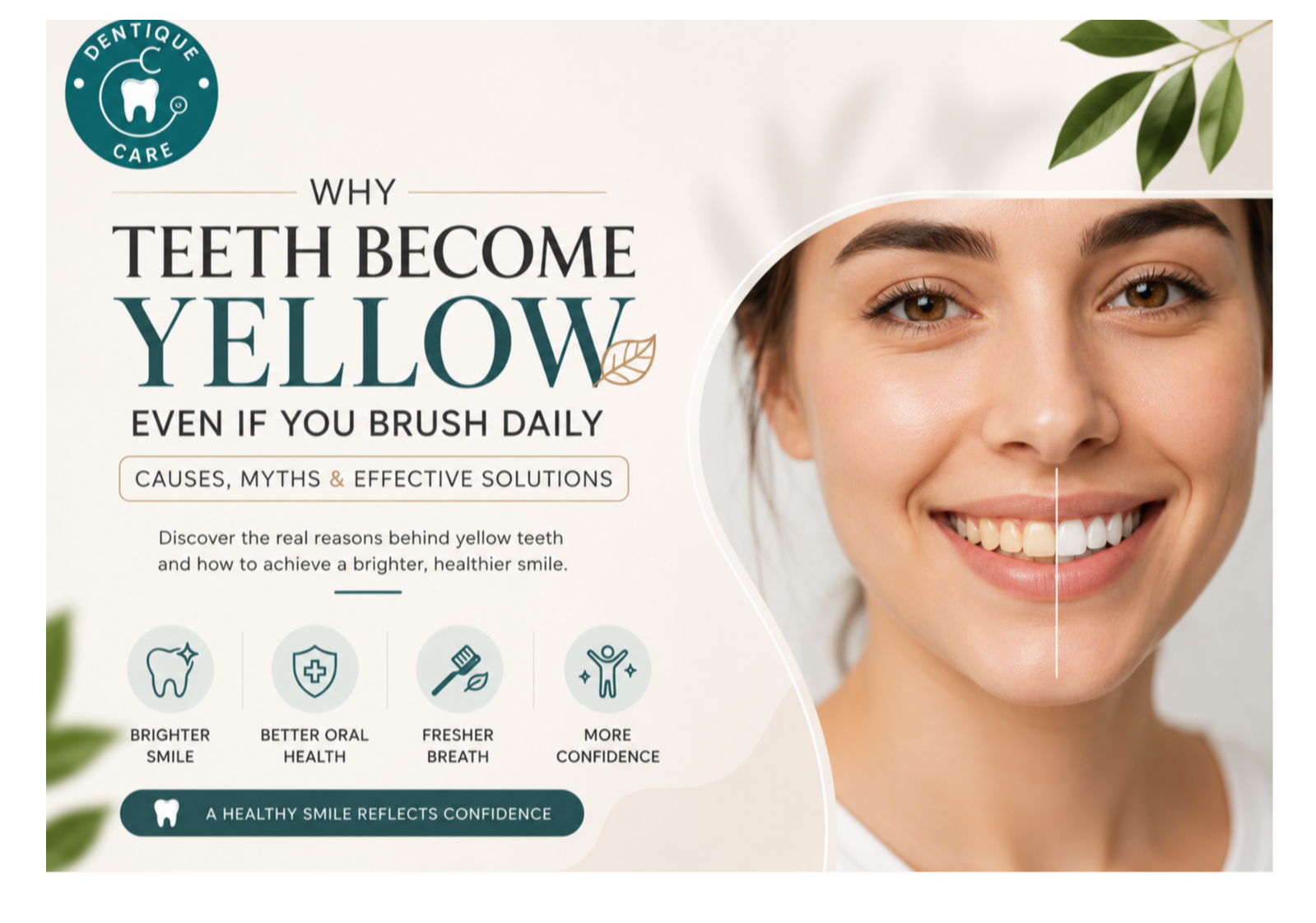
Why Teeth Become Yellow Even If You Brush Daily: Causes, Myths, and Effective Solutions
Introduction
You brush your teeth twice a day, use a good toothpaste, and maintain proper oral hygiene—yet your teeth still appear yellow. If this sounds familiar, you're not alone. One of the most common questions dentists hear is:
"Why are my teeth yellow even though I brush every day?"
The truth is that brushing alone cannot prevent all types of tooth discoloration. The color of your teeth is influenced by several factors, including genetics, aging, diet, lifestyle habits, medications, and even the structure of your teeth.
While daily brushing is essential for maintaining oral health, it doesn't always guarantee perfectly white teeth. Understanding the real causes of yellow teeth can help you choose the right treatment and avoid ineffective solutions.
This comprehensive guide explains why teeth become yellow despite regular brushing and how you can achieve a brighter, healthier smile. Read the full guide here.
Quick Answer: Why Do Teeth Turn Yellow Even If You Brush?
Your teeth may become yellow despite daily brushing because of:
- Natural aging
- Genetics
- Staining foods and beverages
- Thin enamel
- Smoking and tobacco use
- Plaque and tartar buildup
- Certain medications
- Medical conditions
- Poor brushing technique
- Excess fluoride exposure
In many cases, yellow teeth are completely normal and do not necessarily indicate poor oral hygiene.
Understanding Tooth Color
To understand why teeth become yellow, it's important to know the structure of a tooth.
A tooth has two major layers:
Enamel
The hard outer layer that appears white or slightly translucent.
Dentin
The inner layer, which naturally has a yellowish color.
When enamel becomes thinner, more of the yellow dentin becomes visible, making teeth appear darker or more yellow.
1. Natural Aging Causes Teeth to Turn Yellow
Why It Happens
As we age:
- Tooth enamel gradually wears down.
- Dentin becomes thicker and darker.
- Years of exposure to food and beverages create stains.
Even individuals with excellent oral hygiene often notice yellowing teeth as they get older.
Solution
- Professional dental cleaning
- Teeth whitening treatments
- Good oral hygiene habits
- Avoiding excessive staining foods
Aging-related discoloration is completely normal and can often be improved with cosmetic treatments.
2. Genetics Play a Major Role
Why It Happens
Some people naturally have:
- Thicker enamel
- Thinner enamel
- Darker dentin
- More translucent teeth
Tooth color is strongly influenced by genetics.
Two people with identical oral hygiene habits may have completely different tooth shades.
Solution
Genetic tooth color usually responds well to:
- Professional whitening
- Cosmetic dental procedures
- Veneers in severe cases
3. Brushing Technique May Be Ineffective
Why It Happens
Many people brush every day but do not brush correctly.
Common mistakes include:
- Brushing for less than two minutes
- Missing certain areas
- Using an old toothbrush
- Brushing too aggressively
- Not cleaning along the gum line
Poor brushing techniques allow plaque and stains to accumulate.
Solution
Dentists recommend:
- Brushing twice daily
- Using a soft-bristled toothbrush
- Replacing your toothbrush every three months
- Using gentle circular motions
Quality of brushing matters more than simply brushing frequently.
4. Plaque and Tartar Build-Up
Why It Happens
Plaque is a sticky film of bacteria that forms on teeth.
If not removed properly, it hardens into tartar, which often appears:
- Yellow
- Brown
- Dark yellow
Once tartar forms, brushing alone cannot remove it.
Solution
- Professional dental cleaning
- Regular flossing
- Proper brushing techniques
Routine dental visits help prevent tartar-related discoloration.
5. Food and Drinks Can Stain Teeth
Why It Happens
Certain foods contain pigments that attach to enamel.
Common staining foods and beverages include:
- Coffee
- Tea
- Red wine
- Soft drinks
- Curry
- Soy sauce
- Dark berries
Even healthy foods can contribute to tooth staining over time.
Solution
- Rinse your mouth after consuming staining foods.
- Drink water frequently.
- Use a straw for colored beverages when possible.
- Schedule professional cleanings.
6. Smoking and Tobacco Use
Why It Happens
Tobacco products contain substances that easily stain teeth.
Smoking can cause:
- Yellow stains
- Brown discoloration
- Persistent plaque buildup
- Gum disease
These stains often become deeply embedded in the enamel.
Solution
- Quit smoking.
- Professional teeth cleaning.
- Professional whitening treatments.
Stopping tobacco use significantly improves oral health and appearance.
7. Your Toothpaste May Not Whiten Teeth
Why It Happens
Many toothpastes are designed primarily to:
- Prevent cavities
- Reduce plaque
- Protect gums
They may not effectively remove deep stains or change natural tooth color.
Whitening toothpastes usually remove only surface stains.
Solution
Consult your dentist regarding:
- Professional whitening treatments
- Customized whitening solutions
- Safe whitening products
8. Thin Enamel Makes Teeth Look Yellow
Why It Happens
Enamel can become thinner because of:
- Aging
- Acidic foods
- Teeth grinding
- Acid reflux
- Aggressive brushing
When enamel becomes thin, the yellow dentin underneath becomes more visible.
Solution
- Use a soft toothbrush.
- Reduce acidic foods and drinks.
- Wear a night guard if you grind your teeth.
- Seek professional dental advice.
9. Certain Medications Can Cause Yellow Teeth
Why It Happens
Some medications may cause tooth discoloration, including:
- Certain antibiotics
- Antihistamines
- Blood pressure medications
- Chemotherapy drugs
Some medications also reduce saliva production, increasing the risk of staining.
Solution
Never stop medications without medical advice.
Your dentist may recommend:
- Professional whitening
- Cosmetic treatments
- Preventive oral care strategies
10. Excess Fluoride Exposure
Why It Happens
Too much fluoride during childhood can cause dental fluorosis.
Signs include:
- White spots
- Yellow patches
- Brown discoloration
Fluorosis develops while teeth are still forming.
Solution
Treatment options may include:
- Professional whitening
- Microabrasion
- Cosmetic dental procedures
11. Medical Conditions Can Affect Tooth Color
Certain health conditions may contribute to yellow or discolored teeth.
Examples include:
- Acid reflux
- Dry mouth
- Eating disorders
- Liver disorders
- Nutritional deficiencies
Some conditions weaken enamel and increase staining.
Solution
Treating the underlying condition often improves oral health and tooth appearance.
12. Teeth Grinding (Bruxism)
Why It Happens
Grinding your teeth wears away enamel.
As enamel becomes thinner:
- Teeth become more yellow.
- Sensitivity may increase.
Many people grind their teeth while sleeping and may not realize it.
Solution
- Wear a custom night guard.
- Manage stress.
- Seek professional evaluation.
Common Myths About Yellow Teeth
Myth 1: Yellow Teeth Mean Poor Hygiene
Not always.
Many people with excellent oral hygiene naturally have slightly yellow teeth.
Myth 2: White Teeth Are Always Healthy
Extremely white teeth do not necessarily indicate better oral health.
Healthy teeth naturally have slight variations in color.
Myth 3: Brushing Harder Makes Teeth Whiter
Aggressive brushing can actually damage enamel and make teeth appear more yellow over time.
How to Keep Teeth Whiter Naturally
Brush Properly
Brush twice daily using fluoride toothpaste.
Floss Every Day
Floss removes plaque and food particles between teeth.
Stay Hydrated
Water helps remove staining substances and bacteria.
Reduce Staining Foods and Drinks
Limit:
- Coffee
- Tea
- Soda
- Tobacco products
Visit Your Dentist Regularly
Professional cleanings remove stains that brushing cannot eliminate.
Eat Crunchy Fruits and Vegetables
Foods like apples and carrots help naturally clean the teeth.
Professional Treatments for Yellow Teeth
For comprehensive information on professional treatments and solutions, visit our complete resource.
Professional Teeth Whitening
One of the most effective methods for removing stains.
Dental Cleaning
Removes plaque and tartar buildup.
Dental Bonding
Used for severe discoloration.
Veneers
Ideal for significant cosmetic concerns and long-term smile enhancement.
When Should You See a Dentist?
Consult your dentist if:
- Teeth suddenly become yellow.
- Yellowing is accompanied by pain or sensitivity.
- Home care does not improve staining.
- You notice unusual spots or patches.
Early evaluation can identify underlying problems before they become more serious.
Frequently Asked Questions
Why are my teeth yellow even though I brush twice a day?
Because tooth color is influenced by genetics, aging, enamel thickness, diet, and other factors beyond brushing alone.
Can yellow teeth become white again?
In many cases, yes. Professional cleaning and whitening treatments can significantly improve tooth color.
Does coffee permanently stain teeth?
Coffee can cause stains over time, but professional treatments can usually remove or reduce them.
Are naturally yellow teeth unhealthy?
Not necessarily. Slightly yellow teeth can still be perfectly healthy.
Final Thoughts
Brushing your teeth every day is essential for maintaining good oral health, but it is not the only factor that determines tooth color.
Teeth can become yellow because of:
- Natural aging
- Genetics
- Plaque and tartar buildup
- Staining foods and drinks
- Smoking
- Thin enamel
- Certain medications
- Medical conditions
- Fluorosis
- Teeth grinding
The good news is that most causes of yellow teeth can be managed or improved with proper dental care and professional guidance.
A healthy smile isn't defined by perfectly white teeth. It's defined by strong teeth, healthy gums, and confidence in your oral health. If you're concerned about tooth discoloration, consult your dentist to determine the underlying cause and the best solution for your smile. Learn more about achieving your best smile.